Sen. Judith Zaffirini (D) SD-21 filed Senate Bill 398 (capitol.texas.gov) on Nov. 16, 2026. The bill would have the Department of State Health Services study the potential human health risks of exposure to hydrogen sulfide.
What the Bill Says
The bill is short. It would require the department to:
conduct a study to assess the potential human health risks associated with exposure to hydrogen sulfide
submit a report to the Legislature on the results by Dec. 1, 2028, with any recommendations for legislative or other action
The department could consult with other state agencies and relevant entities as appropriate. The study section would expire Jan. 1, 2029.
The bill does not name any industry, place or source of hydrogen sulfide. It does not set a budget for the study, and it does not say how the department would measure exposure.
Where the Gas Shows Up in Rural Texas
The Railroad Commission of Texas keeps a list of oil and gas fields where operators have reported hydrogen sulfide on Form H-9 filings under its Statewide Rule 36. The list posted on the commission’s website names 2,630 fields in 155 counties, not counting wildcat entries. The counties with the most listed fields are Andrews with 196, Pecos with 186, Crane with 176, Gaines with 145 and Ector with 137.
Statewide Rule 36 applies to oil, gas and geothermal operations where hydrogen sulfide is present at 100 parts per million or more. It requires operators to provide safeguards to protect the general public from the harmful effects of the gas, covering both intentional and accidental releases. The rule measures risk with a radius of exposure around the point where gas could escape. It defines a public area to include a dwelling, place of business, church, school, hospital, school bus stop, government building, public road or park.
Under the rule, a contingency plan is a written plan for alerting and protecting the public within an area of exposure before an intentional release or after an accidental release of a potentially hazardous volume of the gas.
Where It Stands
SB 398 has been filed and has not been referred to a committee. It has no fiscal note yet. The 90th Legislature convenes Jan. 12, 2027. If the bill passes, it would take effect Sept. 1, 2027.
Zaffirini is the only author listed on the bill. Her Senate page says District 21 covers 16 counties, from Laredo to Starr County and north to Travis and Hays counties.
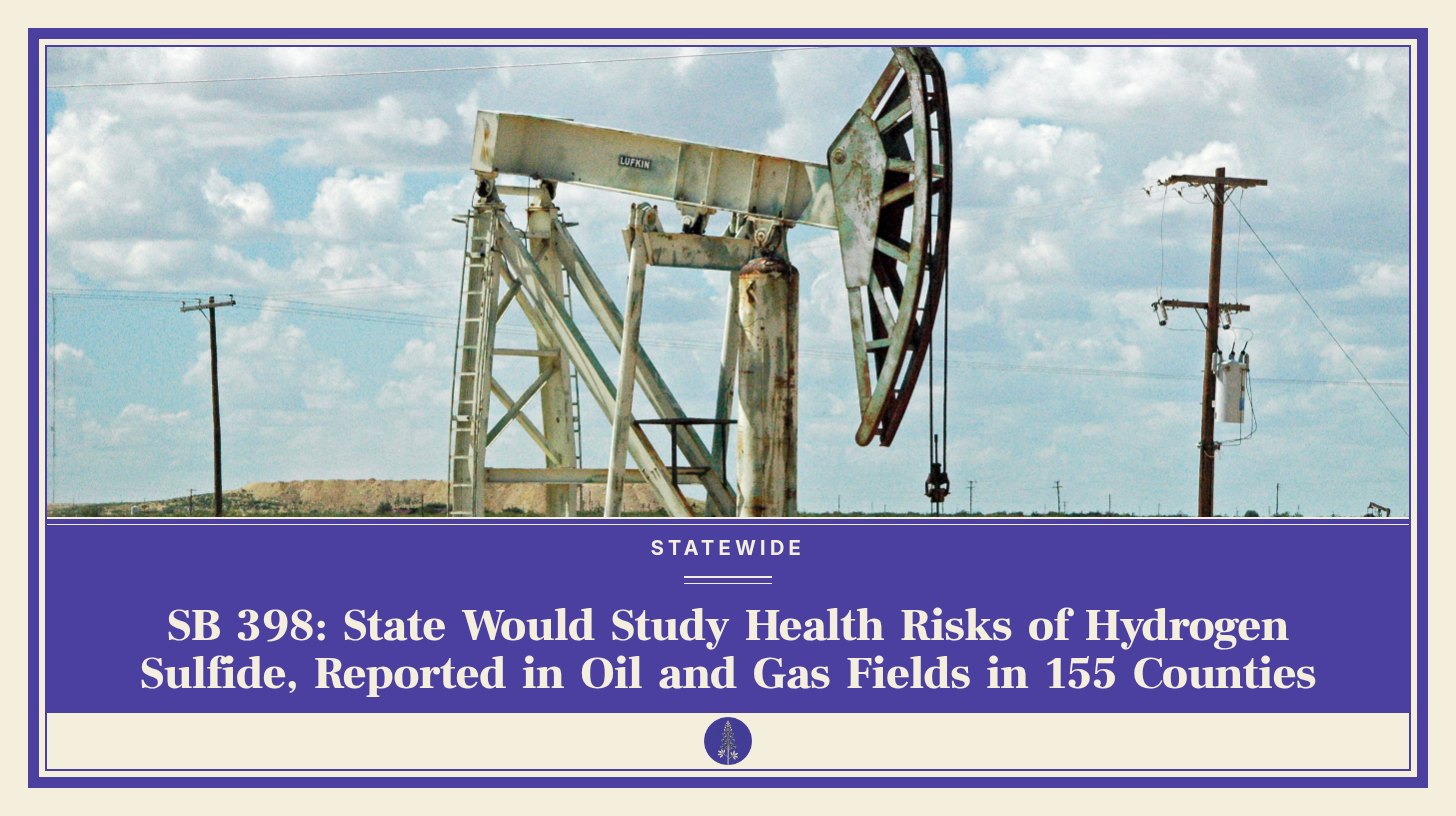
Header photo: An oil well pump jack in Ector County, near the Odessa meteor crater, Aug. 27, 2007. Photo by James St. John, CC BY 2.0, via Wikimedia Commons.
Sources
SB 398 bill history, 90th Legislature: https://capitol.texas.gov/BillLookup/History.aspx?LegSess=90R&Bill=SB398
SB 398 bill text, as filed: https://capitol.texas.gov/tlodocs/90R/billtext/html/SB00398I.htm
Sen. Judith Zaffirini, Senate District 21: https://senate.texas.gov/member.php?d=21
Railroad Commission of Texas, hydrogen sulfide fields and concentration listings: https://www.rrc.texas.gov/oil-and-gas/research-and-statistics/field-data/hydrogen-sulfide-h2s/
Railroad Commission of Texas, Statewide Rule 36 (16 TAC 3.36): https://www.rrc.texas.gov/media/0x5e25yv/r36.pdf
Government Code Section 301.001 (session start): https://statutes.capitol.texas.gov/Docs/GV/htm/GV.301.htm
This story was first published on our Substack.