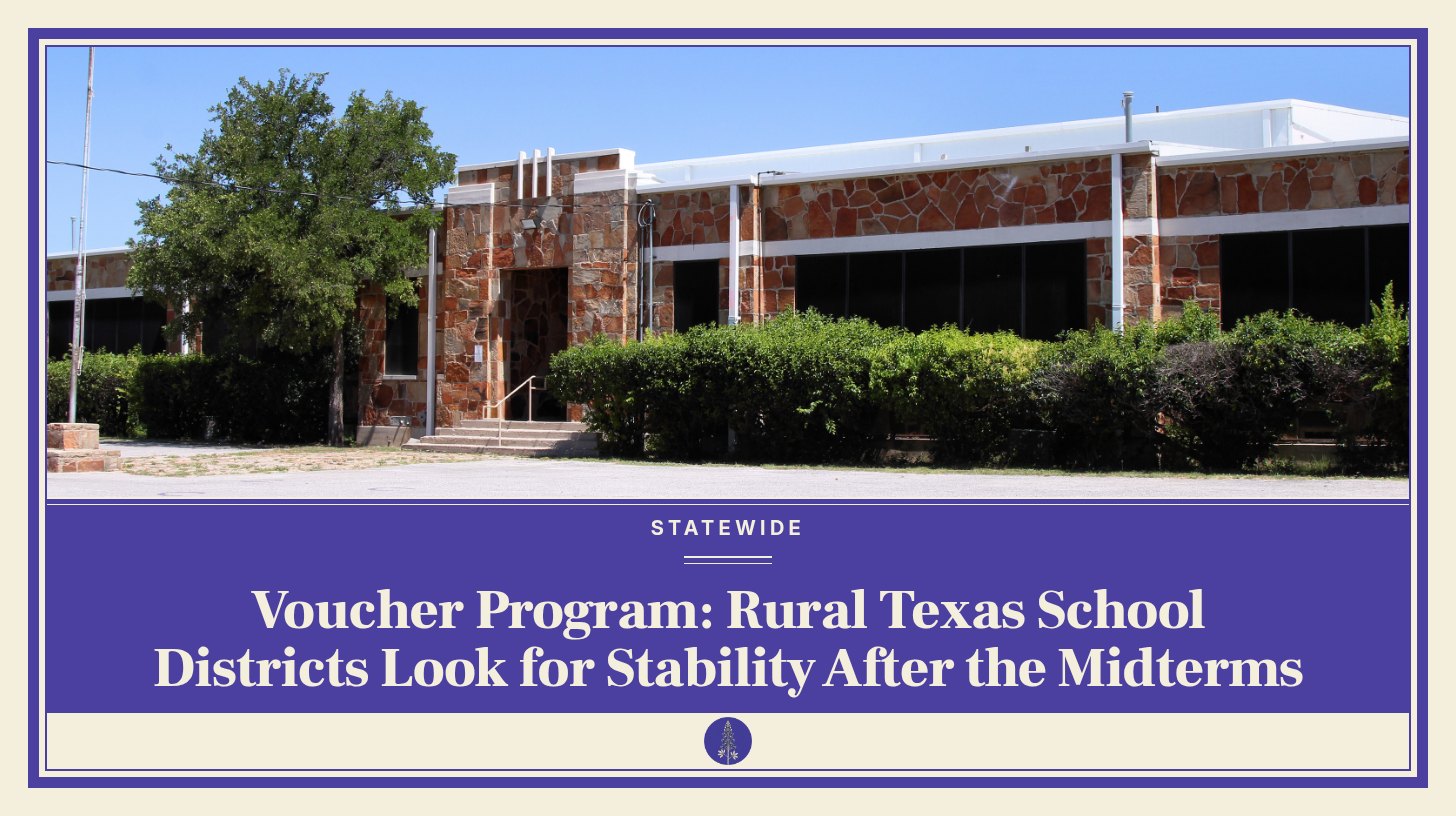
Democratic lawmakers have filed nine bills since Nov. 9 that would repeal the state’s education savings account program, according to Texas Legislature Online. The program, created in 2025 by Senate Bill 2 (capitol.texas.gov) and run by the comptroller’s office as Texas Education Freedom Accounts, gives families public money for private school tuition and other approved education costs, including homeschooling. Opponents call it a voucher program.
The Dallas Express reported Thursday that Democrats filed seven repeal bills, five in the House and two in the Senate, in the first two days of filing. TLO shows seven such bills filed Nov. 9 and 10. Two more were filed Nov. 12. A review of every House and Senate bill listed on TLO as of Friday morning found no bill that would expand the program. None of the nine repeal bills had been referred to a committee as of Friday morning.
The Bills
Sen. Royce West (D) SD-23 filed SB 294 (capitol.texas.gov) on Nov. 9. TLO lists nine Democratic co-authors: Sen. Carol Alvarado (D) SD-6, Sen. César Blanco (D) SD-29, Sen. Molly Cook (D) SD-15, Sen. Roland Gutierrez (D) SD-19, Sen. Juan “Chuy” Hinojosa (D) SD-20, Sen. José Menéndez (D) SD-26, Sen. Borris Miles (D) SD-13, Sen. Taylor Rehmet (D) SD-9 and Sen. Judith Zaffirini (D) SD-21. The bill is two sentences long. It repeals Subchapter J, Chapter 29 of the Education Code, the part of state law that created the program, effective Sept. 1, 2027.
Rep.-elect Chris Jimenez (D) HD-52 filed HB 735 (capitol.texas.gov) on Nov. 9, which TLO lists as very similar to West’s bill. Rep.-elect Katie O’Brien Duzan (D) HD-94 filed HB 1081 (capitol.texas.gov) on Nov. 10, and Rep. Suleman Lalani (D) HD-76 filed HB 1093 (capitol.texas.gov) on Nov. 12. Both follow the same short form and take effect Sept. 1, 2027.
Menéndez filed a longer version, SB 106 (capitol.texas.gov), on Nov. 9. Rep. Mary González (D) HD-75 filed HB 646 (capitol.texas.gov) the same day, and TLO lists it as identical. Rep.-elect Zach Herbert (D) HD-112 filed HB 675 (capitol.texas.gov) on Nov. 9 as well. TLO calls it very similar to SB 106, and the introduced texts of the three bills match word for word after the author lines. These bills repeal the program along with related sections of the Education Code and Government Code. They abolish the program fund and send its unspent, uncommitted balance to general revenue. Money already obligated by contract would be held in trust by the comptroller and paid out under that contract. Money sent to a family’s account for the 2026-27 school year would stay under the current rules.
Rep.-elect Ebony M. Turner (D) HD-96 filed HB 1129 (capitol.texas.gov) on Nov. 12. It carries the same repeal list, the same fund transfer and the same protection for 2026-27 account money as SB 106.
Rep. John Bucy (D) HD-136 filed HB 164 (capitol.texas.gov) on Nov. 9. It repeals the program and removes the comptroller’s access to a state educator misconduct registry and its authority to run criminal background checks on program vendors.
HB 164, HB 646, HB 675, HB 1129 and SB 106 would take effect immediately if each chamber passed them by a two-thirds vote of its members. Otherwise they would take effect Sept. 1, 2027.
Four other bills filed Nov. 9 would change the program without ending it. HB 324 (capitol.texas.gov) by González would require participating private schools to post on their websites what services they provide to students with disabilities. HB 580 (capitol.texas.gov) by Rep. Erin Gámez (D) HD-38 would require participating private schools to comply with federal disability laws, including the Individuals with Disabilities Education Act. HB 916 (capitol.texas.gov) by Rep. Mark Dorazio (R) HD-122 would require private schools to state whether they accept students who must miss school often because of a medical condition. SB 291 (capitol.texas.gov) by Sen. Charles Perry (R) SD-28 would limit spending on online or virtual education services to homeschooled students, students with disabilities and students with a documented medical condition, starting in the 2027-28 school year.
Where Participants Live
The comptroller’s Oct. 1 participant report counted 116,574 funded accounts and more than 95,000 students on a waiting list. It said more than 18% of participants have a qualifying disability and 62% come from households at or below 200% of the federal poverty level. The Texas Tribune reported Friday, citing the comptroller’s office, that more than 18,800 students with disabilities use the accounts this year, that about 17% of participants have disabilities and that at least 60% are low-income.
The same report breaks out participants by regional education service center, based on where parents say they live. The Houston region had 24,623. The Richardson region, which covers Dallas, had 19,059, Fort Worth had 15,838 and San Antonio had 10,727. Together those four regions account for about two-thirds of the participants in the regional table. The service centers based in Mount Pleasant, Wichita Falls, Abilene and San Angelo, which serve largely rural parts of the state, reported 414, 384, 457 and 585 participants. The comptroller said 919 school districts have at least one participant.
An analysis of comptroller application data by The Dallas Morning News, published in July in the Longview News-Journal, found rural districts made up 11% of applications. The analysis left out about 5,200 applications from more than 540 districts, mostly rural, because the state does not release counts under 30.
Private school options are thinner outside the metro areas. As of Feb. 4, more than 150 of Texas’ 254 counties had no participating elementary, junior high or high school, the Texas Observer reported. About 70% of participating schools on the comptroller’s list as of Jan. 1 were in the Houston, Dallas-Fort Worth, San Antonio and Austin areas, the Observer found.
What Rural School Leaders Have Said
Rural superintendents told the Houston Chronicle in July that the program made it hard to plan budgets and staffing. Brandon Enos, superintendent of Gunter ISD and legislative chair of the Texas Rural Education Association, said his district of about 1,200 students could not get the counts it needed from the state. “We are asking for the information we need to responsibly operate our schools,” Enos said. “We can’t just react afterwards because, unlike large urban districts, a relatively small number of students dramatically affects our staffing.” He added: “This is another way that this economy of scale is hurting the small districts.”
Jaime Clark, superintendent of Henrietta ISD near the Oklahoma border, told the Chronicle that “our budget is so tight that it only takes about one or two little changes like that to put us in a bigger deficit.”
Randy Willis, director of the Texas Association of Rural Schools, was less concerned. He told the Chronicle that most member districts have few private schools nearby, so he expected small enrollment effects. Willis also noted that the Legislature raised funding for smaller districts in 2025 and gave rural teachers larger raises. He said the 2025 changes also temporarily limited how much state money districts could lose when students withdraw.
Daniel DeMatthews, an education policy professor at the University of Texas at Austin, told The Dallas Morning News that if one child per grade left a small rural elementary school, the school would lose about $60,000 in state funding. “That’s a teacher salary that’s no longer there, but do you need one less teacher? No, you still need the same amount of teachers,” he said.
Our Schools Our Democracy, a group that opposes the program, told a Senate committee that 733 districts stood to lose an estimated $294 million this school year, using counts as of Aug. 10. Dee Carney, director of its Texas Center for Voucher Transparency, testified that fixed costs stay when students leave, which creates budget problems “especially for rural districts.” The group and Every Texan later estimated losses of at least $227 million, the Tribune reported.
Former state Rep. Travis Clardy, an East Texas Republican, told KLTV last week that “vouchers lived down to my expectations.” He said he backed trying vouchers with guardrails while in office and now thinks it is time to move away from the program. Tyler ISD Superintendent Marty Crawford told the station the program is “baked into statute right now” and that any change would be worked out between the governor’s office and the Legislature.
What Repeal Supporters Say
Bucy told Spectrum News that “we need to repeal the voucher scheme.” He said, “I think the voters spoke loud and clear. One of the top issues of Gov.-elect Hinojosa is to protect public schools, and vouchers have been a direct attack at that.” Bucy told the Tribune the program was carried out in a way that was “very harmful” to public schools. He also said he wants to hear from families and is willing to consider grandfathering or other limited options, especially for students with disabilities already in the program. West told the Tribune he is “open to a conversation to come up with some sort of solution.”
Gov.-elect Gina Hinojosa (D) said in her victory speech that she would “work tirelessly to repair the damage of the Texas vouchers scam,” the Tribune reported. Rep. Diego Bernal (D) HD-123, vice chair of the House Public Education Committee, told the Tribune he wants to keep some form of added support for families of students with disabilities if the program ends. “I don’t believe there’s any desire to take the rug out from under these students and their families,” he said.
Carrie Griffith, executive director of Our Schools Our Democracy, said in a statement to the Tribune that the next Legislature “will have the opportunity to fully fund special education so that all families can receive the services that their child needs, rather than diverting public funds to private entities where too many families have been turned away at the door.”
What Program Supporters and Families Say
Christie Slape, a Texas ambassador for Moms for Liberty and a leader on its legislative committee, told The Dallas Express the group’s earlier wins are at risk. “We recognize that many of the bills we supported last session are at risk of being reversed, and that is highly concerning,” Slape said. She listed school choice along with girls’ sports, school library book rules and the Parental Bill of Rights, and said, “We are hopeful that the Texas Senate will hold the line in defending potential legislative reversals.” Denise Bell, the group’s Harris County chapter chair, told the paper it will work with newly elected officials. “We are not deterred or dismayed,” she said.
Sen. Paul Bettencourt (R) SD-7 wrote on social media that the Legislature should review this school year to see “what’s working well and what’s not,” the Tribune reported. Travis Pillow, a spokesperson for the program, told The Dallas Morning News in July that it needs better outreach to lower-income and rural communities and that he expects more private schools serving those families to open. “Gaps in the marketplace hopefully can be filled by creative educators, the philanthropic community, and other people who want to make sure that these kids have great opportunities,” Pillow said.
Parents using the accounts told reporters they worry about losing the money. Rachel Pearce, a former public school teacher who homeschools three children in Farmersville, told KERA the $2,000 per child pays for materials she could not afford before. “It’s just nerve-wracking knowing that the program could be totally eliminated just like that,” she said. Alex Narvaez, a Houston-area father and a Democrat whose three sons attend a Catholic school in Tomball, told KERA that “you can fund public schools and also create a choice program.” Brenda Rangel, an assistant dean at Rice University’s Glasscock School of Continuing Studies, told the Tribune that ending the program would be hard on “low-income rural families that cannot afford their children to go to a private education.”
What Happens Next
Republicans kept their majority in the Senate, so a repeal bill would have to pass a Republican-led chamber before reaching Hinojosa. Hinojosa can also veto line items in the next state budget, and overriding an item veto takes a two-thirds vote in both chambers, the Tribune reported. The 90th Legislature convenes Jan. 12, 2027.
Sources
https://capitol.texas.gov/BillLookup/History.aspx?LegSess=90R&Bill=SB294
https://capitol.texas.gov/tlodocs/90R/billtext/html/SB00294I.htm
https://capitol.texas.gov/BillLookup/History.aspx?LegSess=90R&Bill=SB106
https://capitol.texas.gov/tlodocs/90R/billtext/html/SB00106I.htm
https://capitol.texas.gov/BillLookup/History.aspx?LegSess=90R&Bill=HB164
https://capitol.texas.gov/tlodocs/90R/billtext/html/HB00164I.htm
https://capitol.texas.gov/BillLookup/History.aspx?LegSess=90R&Bill=HB646
https://capitol.texas.gov/tlodocs/90R/billtext/html/HB00646I.htm
https://capitol.texas.gov/BillLookup/History.aspx?LegSess=90R&Bill=HB675
https://capitol.texas.gov/tlodocs/90R/billtext/html/HB00675I.htm
https://capitol.texas.gov/BillLookup/History.aspx?LegSess=90R&Bill=HB735
https://capitol.texas.gov/tlodocs/90R/billtext/html/HB00735I.htm
https://capitol.texas.gov/BillLookup/History.aspx?LegSess=90R&Bill=HB1081
https://capitol.texas.gov/tlodocs/90R/billtext/html/HB01081I.htm
https://capitol.texas.gov/BillLookup/History.aspx?LegSess=90R&Bill=HB1093
https://capitol.texas.gov/tlodocs/90R/billtext/html/HB01093I.htm
https://capitol.texas.gov/BillLookup/History.aspx?LegSess=90R&Bill=HB1129
https://capitol.texas.gov/tlodocs/90R/billtext/html/HB01129I.htm
https://capitol.texas.gov/BillLookup/History.aspx?LegSess=90R&Bill=HB324
https://capitol.texas.gov/BillLookup/History.aspx?LegSess=90R&Bill=HB580
https://capitol.texas.gov/BillLookup/History.aspx?LegSess=90R&Bill=HB916
https://capitol.texas.gov/BillLookup/History.aspx?LegSess=90R&Bill=SB291
https://capitol.texas.gov/BillLookup/History.aspx?LegSess=89R&Bill=SB2
https://www.texastribune.org/2026/11/13/texas-school-vouchers-students-disabilities-uncertainty/
https://www.yahoo.com/news/politics/articles/hundreds-texas-school-districts-dont-100000427.html
https://www.texasobserver.org/texas-voucher-schools-openly-discriminate/
https://www.kltv.com/2026/11/05/east-texans-react-hinojosa-wants-tea-commissioner-vouchers-removed/
https://www.kera.org/2026/11/12/texas-democrats-repeal-school-vouchers-families-education-funding/
This story was first published on our Substack.